
On December 18, 2025, both houses of India’s Parliament passed the Sustainable Harnessing and Advancement of Nuclear Energy for Transforming India (SHANTI Bill 2025) clearing the way for a new major civil nuclear framework (“the Act”), repealing the Atomic Energy Act of 1962 and the Civil Liability for Nuclear Damage Act 2010. This transformative legislation will fundamentally reorganize India’s nuclear generation infrastructure permitting the construction and operation of nuclear power plants by Independent Power Producers (IPPs) and other qualified entities. The private entities will be empowered to build, own, operate and decommission nuclear power plants in India. Certain core functions, namely enrichment of nuclear material, production of heavy water, and management of spent fuel beyond the on-site storage at the nuclear power plant will, remain with the Central Government which for the purpose of the act is defined as Department of Atomic Energy (DAE). The Act also establishes a specialized supervening body called the “Atomic Energy Redressal Advisory Council” for settlement of disputes brought by the licensee or any aggrieved person on a decision of DAE or the Atomic Energy Regulatory Board (AERB); which can be further escalated to an Appellate Tribunal, and finally to the Supreme Court of India.
Most important, the AERB will be granted formal statutory status as an independent regulator empowering it to function as an autonomous authority with the focused mandate and responsibility to ensure safety of operating nuclear plants, which is like the regulatory control model employed in the US and most western democracies. As befits an agency entirely focused on nuclear safety, the AERB will have no role in promoting nuclear generation, which will likely remain with the Central Government (DAE) or (more fittingly) get arrogated to the Power Ministry. The limit of the Operator’s liability has been aligned with international norms. In addition, the Operator may devolve a portion of their statutory liability to other entities in their supply chain such as the license holder, the supplier of capital equipment and systems, and the constructor through their bilateral contracts. Wisely, the Act ties the extent of operator’s liability to the thermal output of the reactor.
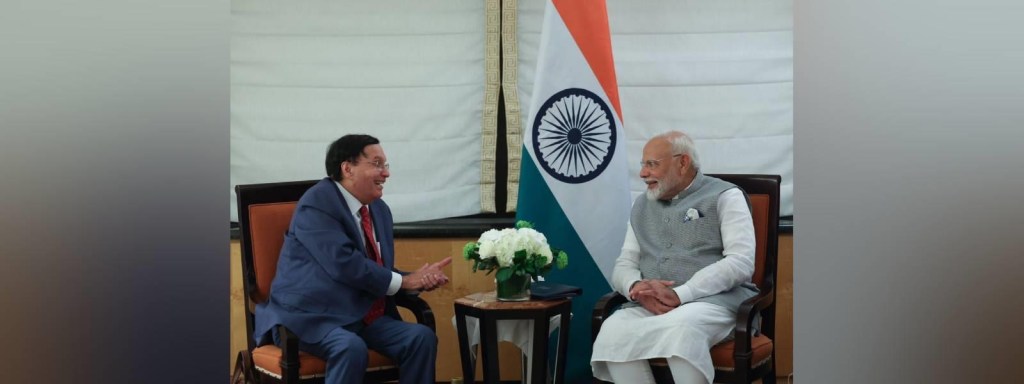
“The passage of this Act is a momentous event in the history of modern India which will catalyze nuclear generation and enable Prime Minister Modi’s bold vision to generate ‘100 GWe by 2047’ to be realized. By passing this bill, India has finally buried the socialist dogma that required the State to stand at the commanding heights of the economy hobbling growth and causing industrial stasis. The world should hail India’s most consequential Prime Minister in a generation for launching the nuclear renaissance which will lead to meeting the nation’s net-zero goal, turbocharge its economy, strengthen energy security, and improve the quality of air for some 1.8 billion people who inhabit the subcontinent. I have fervently believed that the small modular reactor (SMR) is the most suitable version for India and have made the case for adopting it widely to the nation’s policy makers including the honorable Prime Minister. I am thrilled to witness the nation embrace private enterprise in the nuclear energy sector which, I am sure, will dramatically lift the living standards of its citizens by creating millions of new well-paying jobs. This is Prime Minister Modi’s crowning achievement that will give a powerful boost to the nation’s economy which is already the fastest growing major economy in the world,” said Dr. Kris Singh, Founder and CEO of Holtec International.
He added, “We are thrilled that several SMR designs have been sprouting in India in anticipation of this Act which is the way free markets are supposed to work. Our Indian Company, Holtec Asia looks forward to competing with all peer reactor suppliers on a level playing field. We hope that other international nuclear companies will join us in the exciting new market that is likely to be the largest in the world in the foreseeable future. There will be plenty of business for all worthy designs and suppliers.”
We understand that while the Act does not explicitly address the matter of Foreign Direct Investment (FDI), it will be managed by the Government’s Department of Promotion of Industry and Internal Trade (DPIIT) which is expected to be strongly supportive of foreign capital inflows to build nuclear plants in the country.
To remove impediments to Holtec Asia’s vigorous participation in the Indian business theater, it is being reorganized to henceforth operate as a stand-alone enterprise with autonomous authority to join business alliances, raise capital and make strategic investments. Holtec Asia will very soon have its own CEO, a highly accomplished business entrepreneur, and a strengthened Board of Directors to energetically contribute to India’s nuclear renaissance. Holtec Asia will operate under an alliance agreement with Holtec International in full accord with US and Indian laws. Because of their compatible electrical and controls infrastructure (viz, 50 Hz AC) Holtec Asia is expected to work closely with Holtec Britain, which is leading the 50 Hz conversion of SMR-300’s instrumentation and control systems.
Undoubtedly, the Act has unleashed unprecedented hope and optimism amongst the country’s business leaders, engineers, and scientists. The national sense of e’lan is captured by Dr. Arun K. Nayak, a retired top official of DAE who made the bold prediction that “India will have 200 operating SMRs in 20 years.”
Finally, we should thank the Nuclear Energy Institute (NEI) for making the case for the Act in several effective engagements over the past two years with the Government of India officials and India’s own august institutions, Bhabha Atomic Research Centre and DAE, for supporting this epochal Act.
You must be logged in to post a comment.