84514def-7032-4c2b-979c-34ca1ef5a715
SMR-300
is Safe and Secure
is Economical & Efficient
is Dependable & Reliable
is Environment-Friendly
is Clean Energy for Our Future
Island Mode

Did you know that SMR-300 can operate in “Island Mode?”

Most nuclear plants operating today need to shut down if there is a loss of grid power. However, SMR-300 can operate in “Island Mode” during power outages. The SMR-300 is able to provide power to large load centers directly connected to the plant, such as data centers, industrial facilities, and microgrids. It can also operate at low power in standby to support grid recovery.
Safety Boundaries

Did you know that SMR-300 aims to redefine nuclear safety boundaries?

The protected, secure area around an SMR-300 is much smaller than that of a standard nuclear power facility because the risk associated with its operation is minimal. The passive safety features of the fortified structure help negate the chance of any type of operational incident that could threaten the public.
Lean Team

Did you know that SMR-300 delivers big power with a lean team?

Holtec’s SMR-300 is a compact nuclear reactor that generates over 300 MWe using a simple, two-loop system with a built-in steam generator and pressurizer. It’s designed to be safer and more reliable by using passive safety features that work without needing operators to step in during emergent events. Because of this, it needs a lot fewer staff—around 270 people for a twin reactor plant — for an economic cost of operation compared to older nuclear plants.
Efficient

Did you know that SMR-300 is much more efficient than other small nuclear reactors?

SMR-300 can create more power with less fuel, equipment and land compared to all other small modular reactors. That’s because the design of SMR-300 is optimized to create superheated steam, producing less waste heat, steam and water.
Palisades

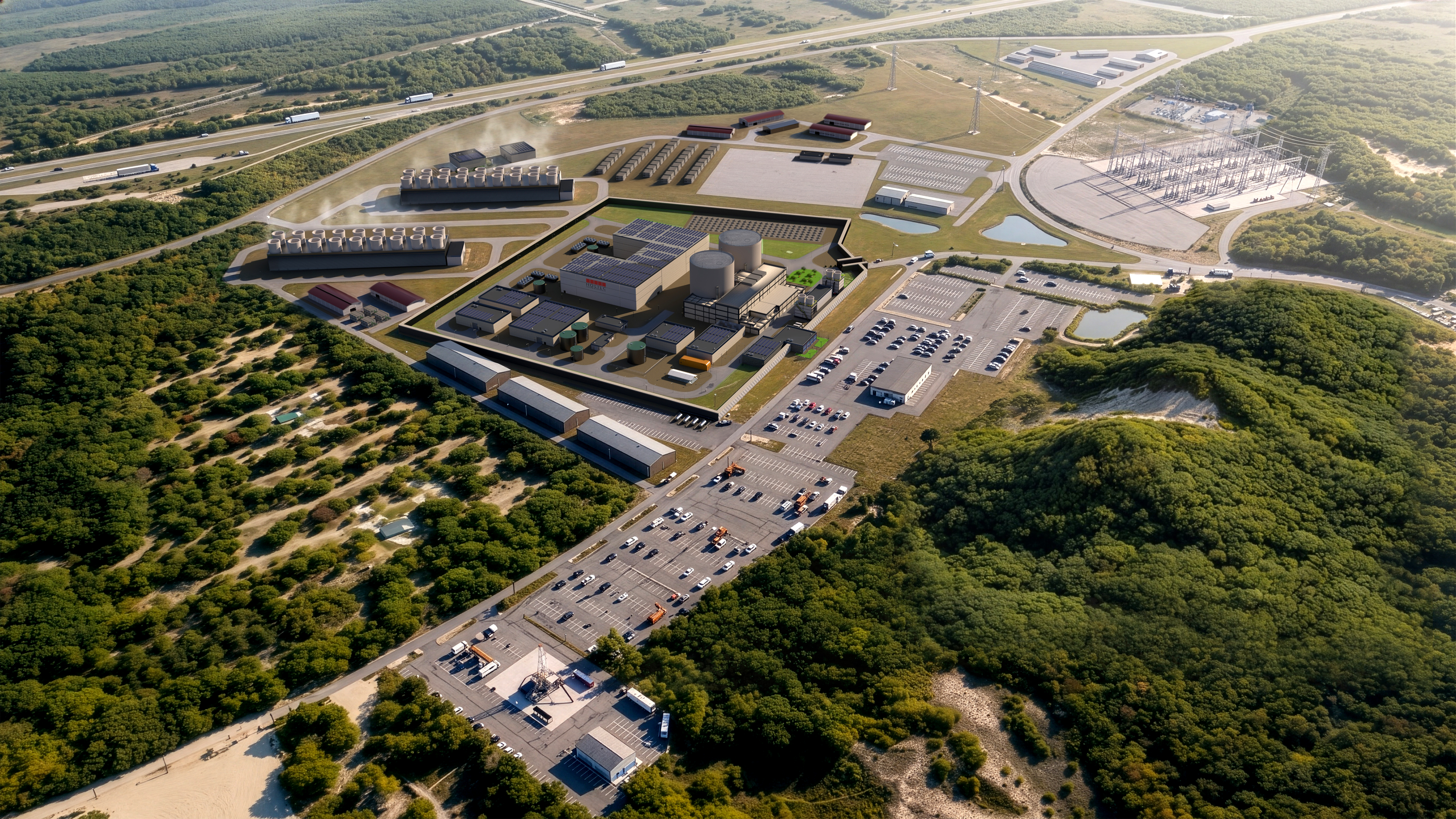
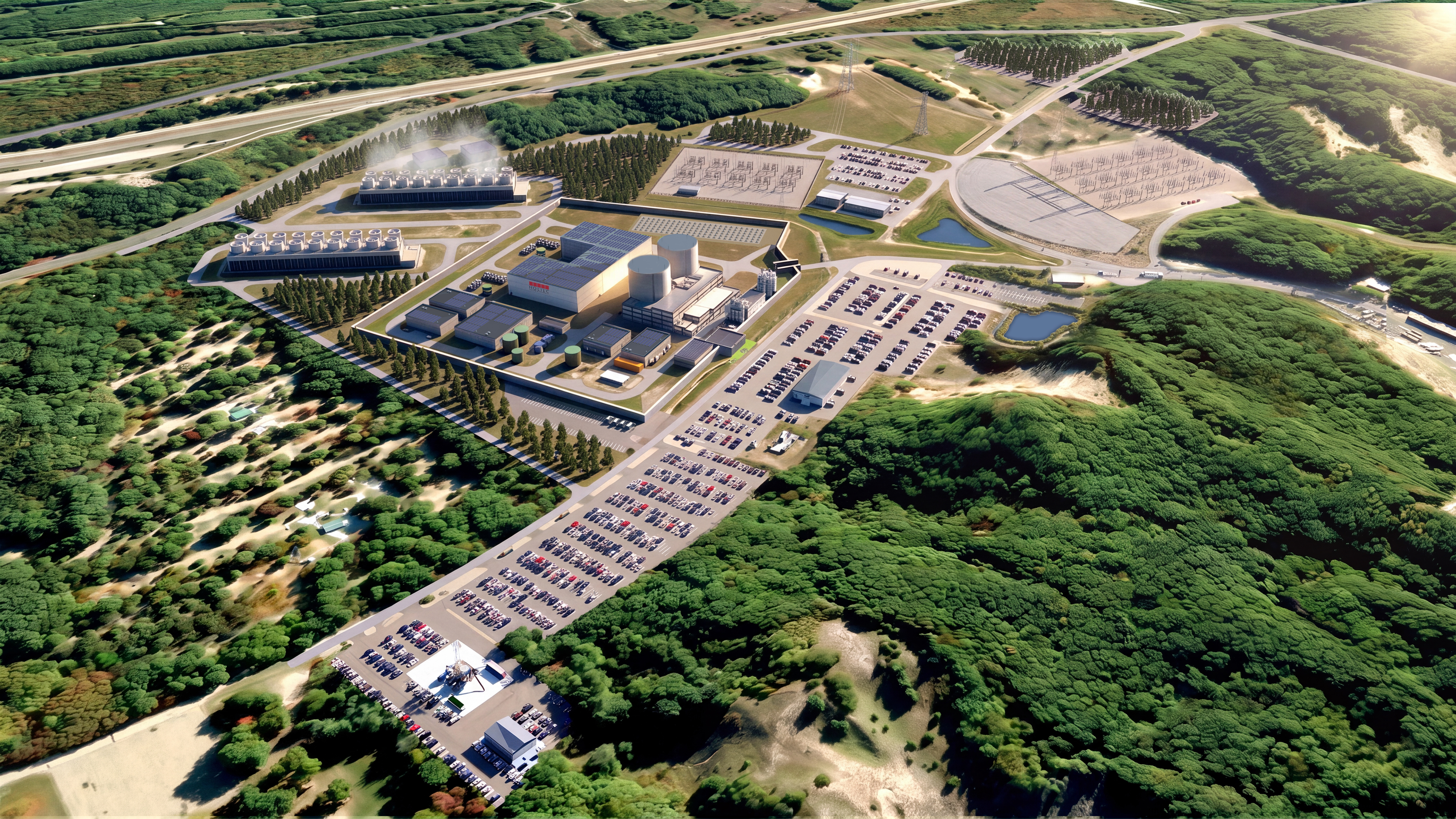
Did you know the first SMR-300 will be built and operated at Palisades in Michigan?

Not only will Holtec’s first SMR-300 be built on Palisades property, it may be the first small modular reactor deployed in the United States. Holtec expects to restart the Palisades large reactor in the 4th quarter of 2025. Site master planning for the proper sequencing of all restart and construction activities is complete, and preconstruction activities should get underway as soon as the Palisades restart has been completed.

Holtec’s SMR-300 design, licensing and construction team is diligently finalizing the SMR-300 design and preparing the first part of the construction permit application (CPA Part I) to the NRC by December 2025. This will include a full environmental report and a limited work authorization to allow certain construction activities on the Palisades SMR-300 to begin in mid-2027. Siting the SMR-300 adjacent to the existing Palisades power plant unique synergies and efficiencies for the cost of operation, leveraging existing personnel, property and infrastructure.
Economies-of-Scale

Did you know that SMR-300 solves the economies-of-scale by optimizing a single plant with two reactors?

The SMR-300 design is the most economical small modular reactor. One of the ways this is achieved is by its unique arrangement, sharing many support systems and structures across two units with dedicated reactors and turbines, each of which generates around 320 MWe. With less concrete, steel, pipe and other commodities per megawatt than other small modular reactors, the SMR-300 overcomes the diseconomies of single reactor power plant scale.
Containment

Did you know the SMR-300 spent fuel pool is inside containment?

The SMR-300 design incorporates the spent fuel pool (SFP) inside of its containment structure unlike most other traditional pressurized water reactors, for exceptional nuclear safety and operational economics. This is done to optimize both the refueling outage strategy and overall fuel management. The integration of Holtec’s proven dry fuel storage technology into the SMR-300 design with the location of the SFP inside containment eliminates the need for a fuel elevator, a fuel canal, a separate fuel handling building, canister processing inside containment, and the need for dry storage campaigns. This enables more efficient, less time-consuming refueling durations (~7 days) and reduced overall outage times (~15 days).
Instrumentation and Control Platform

Did you know the SMR-300 Instrumentation & Control (I&C) platform is being designed and integrated by the Holtec SMR and Mitsubishi Electric (MELCO) teams?

The Holtec SMR and MELCO teams have integrated their proven Mitsubishi Electric Total Advanced Controller (MELTAC)® Digital I&C platform protection and control systems into the SMR-300 design. The MELTAC platform is designed for use in both safety and non-safety I&C systems within SMR-300, featuring a modular structure, deterministic response times, and high testability, making it suitable for the entire range of plant-wide applications. The MELTAC platform has been engineered and integrated by the Holtec and MELCO teams through a rigorous safety-related design process, ensuring that both its hardware and software meet the high reliability and quality standards required for critical systems, such as the Reactor Protection System (RPS) and Engineered Safety Features Actuation System (ESFAS).
3D Model

Did you know the SMR-300 is being designed using a fully integrated SMARTPLANT 3D Model?

Holtec’s SMR-300 is being designed with a fully integrated SMARTPLANT 3D model. What does this mean? It means that project teams from both Holtec SMR and Hyundai Engineering & Construction (HDEC) are generating a fully integrated 3D model of the nuclear and turbine islands. In this model everything is included – mechanical equipment, piping, supports, civil and structural design details, cable routing, HVAC, fire protection – and it is all fully integrated and shown together. This allows for a thorough review of SMR-300 plant during final design and construction planning. Operators, engineers, designers, and construction experts routinely perform detailed tabletop reviews using the model to ensure accessibility, constructability, and maintainability.
Slide 1

Did you know the SMR-300 Ultimate Heat Sink (UHS) surrounds the Containment Structure (CS)?

A large captive body of water inside the Containment Enclosure Structure, the Annular Reservoir (AR), serves as the UHS with substantial long-term capacity for decay heat removal, ensuring SMR-300 is walk-away safe. The AR is contained in the annulus space between the CS and CES. The CS and CES form the inside and outside wall of the AR, respectively. The AR has sufficient capacity to accept heat from the core, spent fuel pool, and containment during a design basis accident (DBA). Decay heat from the core may be transferred from the Once-Through Steam Generator (OTSG) to the AR through the Secondary Decay Heat (SDH) heat exchanger. Additionally, heat from the CS may be transferred to the AR by conduction through the steel containment wall. The design of the SMR-300 AR has incorporated decades of operational, maintenance, and in-service testing experience to ensure it is able to meet its safety function for the entire 80-year life of the plant.
Slide 1

Did you know the SMR-300 does not require safety related AC power?

The SMR-300 design eliminates reliance on safety-related AC power, unlike traditional large reactors that depend on AC-driven pumps for cooling functions. Instead, safety systems are powered entirely by standard, 1E qualified, lead-acid batteries. The electrical and I&C systems are engineered to perform all monitoring, actuations, and post-accident monitoring functions for a minimum of 72 hours. This approach ensures safety performance without emergency diesel generators or operator intervention. The result is a simplified, resilient design aligned with modern safety expectations.
Slide 1

Did you know the SMR-300 Reactor Coolant System (RCS) is designed using a Once-Through Steam Generator (OTSG) with Integral Pressurizer (PZR)?

The SMR-300 is a two-loop PWR, utilizing two cold legs each with a vertically mounted reactor coolant pump, two hot legs, and a single OTSG with an integral PZR stacked on top. The OTSG is located adjacent to the reactor pressure vessel and is designed to produce superheated steam at full power-conditions. The single, vertical, straight tube, once-through, countercurrent flow OTSG operates in the general ranges of pressure and temperature of existing PWR OTSG designs. The integral PZR on top of the OTSG has an internal divider plate separating the circulating RCS volume in the turnaround region of the OTSG from the saturated PZR volume. The divider plate is designed to limit thermal communication between the volumes which helps minimize the PZR heater size while allowing sufficient flow into and out of the PZR volume for RCS pressure control during normal operations and transients. The design, materials, fabrication, operation, and maintenance of the SMR-300 OTSG and integral PZR will ensure a long service life by minimizing life-limiting factors such as stress corrosion cracking, erosion, wear, and flow induced vibration.
Slide 1

Did you know the SMR-300 is designed for minimal main control room staffing?

The SMR-300 features a highly automated control architecture that supports streamlined staffing in the Main Control Room (MCR). Under normal power operations (Mode 1), two units can be supervised from a shared MCR by a single licensed Reactor Operator (RO) and a single licensed Senior Reactor Operator (SRO). Each unit’s Human-System Interface (HSI) is accessed via dedicated Video Display Units (VDUs) at the RO and SRO workstations.
Because of this high degree of automation—including automated control and safety actuation—the role of MCR operators during abnormal events is focused on monitoring plant conditions and verifying the correct response of the HSI.
For a two-unit SMR-300 plant, the full on-shift crew also includes a Shift Manager (licensed SRO), a Field Support Supervisor (licensed SRO), and several non-licensed field operators (NLOs).
This staffing concept will be validated through the Human Factors Engineering (HFE) Staffing and Qualification process per NUREG-0800, Chapter 18, and Holtec plans to pursue an exemption to 10 CFR 50.54(m) based on the SMR-300’s automation capabilities and control design.
Slide 1

Did you know the SMR-300’s major structures, systems, and components (SSCs) will be manufactured by Holtec’s U.S.-based production fleet?

Holtec International maintains a vertically integrated supply chain with over four decades of nuclear manufacturing experience and operates three advanced fabrication facilities in the U.S.—the Advanced Manufacturing Division (AMD) in Camden, NJ; the Holtec Manufacturing Division (HMD) in Pittsburgh, PA; and the Orrvilon facility in Orrville, OH.
These ASME-certified plants are fully equipped to manufacture the SMR-300’s principal mechanical and structural components, including the Reactor Pressure Vessel (RPV), the Once-Through Steam Generator (OTSG) with integral Pressurizer, and the modular steel-concrete structural assemblies that comprise the nuclear island.
Holtec’s current manufacturing strategy supports a baseline production capacity of two SMR-300 units per year, with future expansion envisioned through the planned Holtec Heavy Industries (HHI) facility to meet expected fleet deployment demand.
Instrumentation and Control Platform

Did you know Holtec has partnered with Hyundai Engineering & Construction (HDEC) for the construction and delivery of the SMR-300?

Holtec International has established a strategic partnership with Hyundai Engineering & Construction (HDEC), a globally recognized Engineering, Procurement, and Construction (EPC) contractor with over 50 years of nuclear project experience. HDEC has successfully constructed 18 nuclear power plants in South Korea and all four APR-1400 units at the Barakah site in the United Arab Emirates—recognized internationally for its timely and budget-conscious execution.
Under this partnership, HDEC is responsible for detailed Balance of Plant (BOP) design and full-scope plant construction of the SMR-300, supporting Holtec’s deployment model both in the U.S. and globally. HDEC brings proven capabilities in modular construction, cost control, and delivery of large-scale energy infrastructure projects.
In 2023, HDEC was ranked 11th globally in Engineering News-Record’s Top 250 International Contractors list, reinforcing their position as a premier EPC provider and a key partner in the successful realization of Holtec’s SMR-300 program.
previous arrow
next arrow